It's finally running season! The weather is cooler, your running shoes are ready, and you're excited to get back outside. But there's one problem: an annoying pain on the outside of your foot that's making every step uncomfortable.
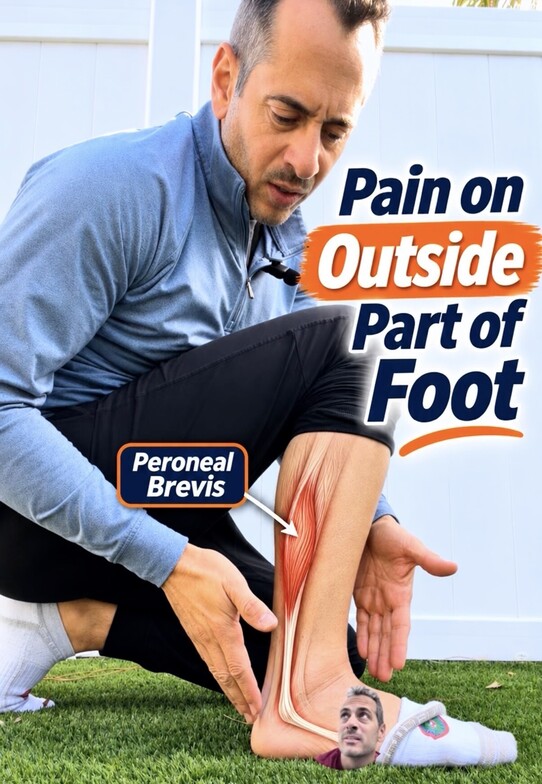
One possible culprit is the peroneal brevis tendon, which attaches to the base of your fifth metatarsal. This tendon plays an important role in ankle stability, especially during activities like walking, running, and jumping.
Let's look at the anatomy, why this area becomes irritated, and what you can do to help relieve the discomfort.
Understanding the Anatomy: What Is the Peroneal Brevis?
The peroneal brevis is a muscle located along the outside of your lower leg. It originates from the lower portion of the fibula, the smaller bone on the outside of your leg.
The muscle transitions into a tendon that travels behind the outside of your ankle and attaches to the base of the fifth metatarsal, the prominent bony area along the outside of your foot.
Its primary functions include:
-
Ankle eversion: Turning your foot outward.
-
Ankle stability: Helping control excessive inward rolling of the ankle.
-
Dynamic support: Assisting with foot and ankle control during walking, running, and changes in direction.
Every time your foot strikes the ground while running, the peroneal muscles help control movement and stabilize your ankle.
Why Does the Base of Your Fifth Metatarsal Hurt?
Repetitive stress can irritate the peroneal brevis tendon, particularly near its attachment to the fifth metatarsal. This condition is commonly referred to as insertional peroneal brevis tendinopathy.
Several factors can contribute to this irritation.
1. Increasing Running Mileage Too Quickly
Suddenly increasing your running distance, speed, or frequency places additional demands on the muscles and tendons supporting your foot.
2. Improper Footwear
Shoes that are worn out, too narrow, or poorly suited to your foot may contribute to excessive pressure or altered loading along the outside of your foot.
3. Ankle Instability
If you've previously sprained your ankle, the peroneal muscles may have to work harder to stabilize the joint, particularly on uneven surfaces.
4. Weakness or Poor Foot Control
Weakness in the peroneal muscles and surrounding ankle stabilizers may reduce your ability to control foot movement during running.
5. Running on Uneven Surfaces
Trails, sloped roads, and uneven terrain can increase the demands placed on the peroneal tendons.
Common Symptoms of Peroneal Brevis Tendon Irritation
Symptoms may include:
-
Pain along the outside of the foot near the base of the fifth metatarsal.
-
Tenderness where the tendon attaches to the bone.
-
Discomfort when walking, running, or pushing off.
-
Pain when turning the foot outward against resistance.
-
Occasional swelling or stiffness along the outside of the ankle or foot.
Important: Not all pain in this area comes from the peroneal brevis tendon. Avulsion fractures, Jones fractures, and fifth metatarsal stress injuries can produce similar symptoms. Sudden pain after an ankle injury, pinpoint tenderness directly over the bone, swelling, or difficulty bearing weight should be evaluated before attempting exercises or returning to running.
What Can You Do to Help Relieve the Pain?
1. Check Your Running Shoes
Your footwear can make a difference.
Look for shoes that provide:
-
A comfortable fit without pressure against the outside of your foot.
-
Adequate cushioning.
-
A stable platform that supports your foot.
-
Enough room in the toe box to allow natural toe movement.
You don't necessarily need the most expensive running shoes. You need shoes that fit your foot and feel comfortable during activity.
2. Soft Tissue Work
When the peroneal muscles become tight or irritated, gentle soft tissue techniques may help reduce muscular discomfort.
Using your hands, a massage ball, or a foam roller, apply light pressure along the muscular portion of the outside of your lower leg.
Avoid aggressive pressure directly over the painful fifth metatarsal attachment or any area of suspected bone injury.
Soft tissue work may provide temporary symptom relief, but it should be combined with appropriate activity modification and strengthening.
3. Strengthen Your Peroneal Muscles
Once a fracture or significant bone stress injury has been ruled out, progressive strengthening can help improve the tendon’s ability to tolerate activity.
Exercise 1: Resisted Ankle Eversion
Sit with your leg extended and place a resistance band around the outside of your foot.
Slowly turn your foot outward against the resistance, then return to the starting position.
Suggested dosage: 2–3 sets of 10–15 repetitions.
Exercise 2: Calf Raises
Stand with your feet shoulder-width apart. Slowly raise your heels off the ground, pause briefly, and lower with control.
Start with both feet and progress to single-leg calf raises as your symptoms improve.
Suggested dosage: 2–3 sets of 10–15 repetitions.
Exercise 3: Single-Leg Balance
Stand on one leg while maintaining a stable ankle and foot position.
As your balance improves, increase the difficulty by adding controlled movements or standing on a slightly less stable surface.
Suggested dosage: 3 rounds of 20–30 seconds.
These exercises should be performed within a comfortable range and progressed gradually. Stop if they reproduce or worsen pain at the fifth metatarsal.
Should You Continue Running?
That depends on the cause and severity of your pain.
If you're experiencing mild tendon-related discomfort, temporarily reducing your mileage, avoiding hills, and allowing adequate recovery may help.
However, if running causes sharp pain, changes your gait, or makes symptoms progressively worse, it's best to stop and have the area evaluated.
If a fracture or stress injury is suspected, avoid running and loading exercises until the diagnosis has been clarified.
Don't Just Treat the Pain. Address the Cause.
The peroneal brevis tendon may be small, but it plays an important role in keeping your foot and ankle stable.
Whether your symptoms are related to overtraining, ankle instability, or improper footwear, identifying the underlying problem is essential for long-term improvement.
A combination of appropriate footwear, activity modification, soft tissue treatment, and progressive strengthening may help you return to running comfortably.
Remember: The goal isn't just to get rid of the pain. It's to improve how your foot and ankle function so you can stay active and keep doing what you enjoy.
This article is for educational purposes and is not a substitute for an individualized examination or diagnosis.

Dr. Steve Muscari
Contact Me