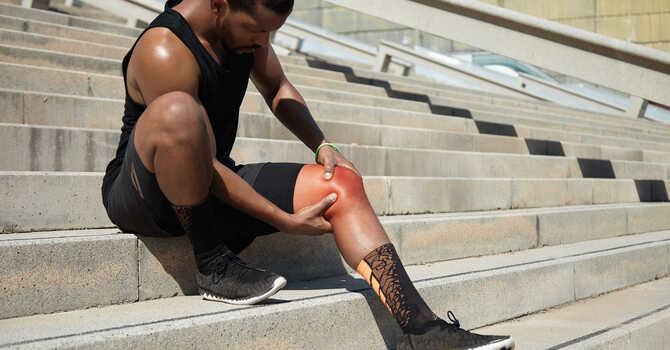
Knee Injuries Can Make Everyday Activities Become Slow And Difficult.
Life slows right down and your overall health can deteriorate quickly.
The good news is that with the right chiropractic care, you can see major improvements and get free from the pain. Whether you're dealing with inner knee pain, lateral knee pain, or discomfort that flares up after running, effective knee pain relief is possible without surgery or medication.
What You Need To Know About Knee Pain
Watch this quick video to gain a better understanding of what's going on.
Knee Pain Is Often Due To Patellofemoral Pain Syndrome (PFPS)
It's a big medical word that describes a painful irritation of the cartilage behind your kneecap.
Although anyone may be affected, it is often the result of overuse of the knee in sports that require jumping or running, so it is sometimes referred to as "Runner's Knee." It's one of the most common causes of knee pain after running and other high-impact activities.
The reason why you need to know this is because PFPS is the most common cause of knee pain in the general population. It affects an estimated 25% of adults.
Why Are You Experiencing So Much Pain?
What are the leading causes of PFPS?
One of the most common causes of PFPS is an imbalance between the muscles that help to guide your kneecap in its V-shaped groove at the end of your thigh bone.
Understanding your knee pain locations and what they mean can be a helpful starting point. Repeatedly flexing and extending a misaligned kneecap leads to pain, swelling and eventually arthritis.
Misalignment of the kneecap (patella) is often secondary to problems in the hip and foot, especially weakness of your gluteal muscles or flat feet. Pain on the inside of the knee is frequently linked to muscle imbalances that start well above the joint itself.
What Are The Symptoms Of PFPS?
PFPS produces a dull pain behind the kneecap. It is aggravated by:
- Prolonged walking
- Running
- Squatting
- Jumping
- Stair climbing
- Arising from a seated position.
The pain can be aggravated by walking downhill or down stairs. Longstanding misalignment can cause damage to the cartilage, which results in popping, grinding or giving way. Some patients also notice pain behind the knee or a sensation of the knee giving out during daily movements.
How Do We Treat Knee Pain?
Conservative chiropractic care, like the type we provide, is generally successful at relieving your symptoms.
Knee pain treatment at New Path Chiropractic in Jupiter, FL focuses on finding and fixing the root cause, not just masking the symptoms. Initially, it is important for you to minimize activities that provoke your pain, especially running, jumping and activities that stress you into a "knock-kneed" position. Don't allow your knees to cross in front of your toes when squatting.
Some athletes may need to modify their activity to include swimming or bicycling instead of running.
Depending on the cause and location of your pain, treatment may include Active Release Technique to release tight soft tissue restrictions around the knee, shockwave therapy to stimulate healing in stubborn chronic cases, or cold laser therapy to reduce inflammation and accelerate tissue repair.
Exercises for knee pain are a cornerstone of our approach. Performing your home exercises consistently is one of the most important things that you can do to help realign the patella, relieve pain and prevent a recurrence. Our team can develop a personalized corrective exercise program tailored to your specific movement patterns and knee pain causes. The use of home ice or ice massage applied around your kneecap for 10-15 minutes, several times per day may also be helpful.
In some cases, dry needling can be a valuable addition to your knee pain treatment plan, targeting trigger points in the muscles that contribute to poor patellar tracking.
Frequently Asked Questions
Pain behind the knee often signals irritation of the soft tissues at the back of the joint, which can be related to hamstring tightness, a Baker's cyst, or overuse. A chiropractic assessment can help identify whether the source is muscular, structural, or related to joint alignment.
The best exercises for knee pain target the hip stabilizers, quadriceps, and gluteal muscles that control how your kneecap tracks. Strengthening these areas reduces stress on the knee joint and helps prevent recurrence. Our corrective exercise program is designed around your specific movement assessment.
Absolutely. Knee pain after running is one of the most common complaints we see, and it responds very well to chiropractic care. We assess the entire kinetic chain, including your hips, ankles, and foot mechanics, to find where the problem originates and address it directly.
Yes, and this is often overlooked. Weakness in the gluteal muscles, poor foot mechanics, or flat feet can all alter how your kneecap tracks, creating pain at the knee even when the knee itself is not the original source of the problem. A thorough chiropractic assessment looks at the full kinetic chain to find where the breakdown actually starts.

