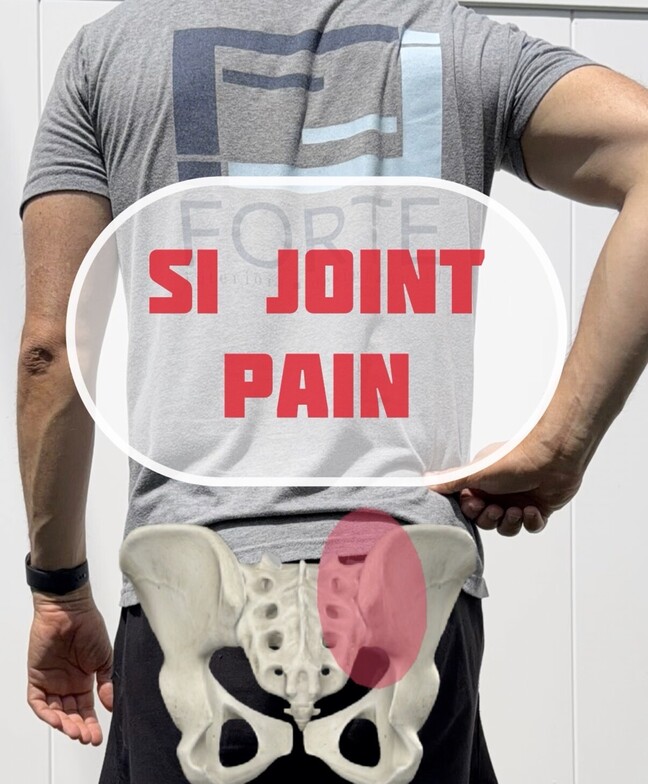
The sacroiliac (SI) joint is a small but important structure located in the lower back where the sacrum (the triangular bone at the base of the spine) connects to the iliac bones of the pelvis. There are two SI joints—one on each side of the body—situated just below the lumbar spine and above the hips. While these joints don’t move a large amount, they play a critical role in transferring load between the upper body and lower extremities and helping provide stability during walking, standing, lifting, and twisting.
Why the SI Joint Becomes Painful
SI joint pain can develop for a variety of reasons, and often it’s not due to a single injury but rather a combination of factors over time. Common contributors include muscle imbalances, poor movement mechanics, repetitive stress, prolonged sitting or standing, and inflammation of the joint structures. In some cases, trauma such as a fall or sudden twist can also irritate the SI joint.
When the surrounding muscles—especially the glutes, core, and hip stabilizers—are not functioning properly, the SI joint can become overloaded. This may lead to localized pain in the lower back or upper glute region. A key characteristic of SI joint irritation is that the pain is often one-sided and does not typically radiate far down the leg like sciatic nerve pain.
Common Symptoms
People with SI joint dysfunction may experience:
- Pain localized to one side of the lower back or upper buttock
- Discomfort when standing up from sitting or transitioning positions
- Pain with walking, stairs, or single-leg loading
- A feeling of stiffness or instability in the pelvis
- Occasional clicking or catching sensation in the low back or hip region
Why It Matters
Because SI joint pain can mimic other conditions such as lumbar disc issues, hip impingement, or even hamstring problems, it is often overlooked or misdiagnosed. Proper identification is important so that treatment focuses on restoring both mobility and stability in the surrounding structures rather than only addressing symptoms.
What Helps SI Joint Pain
Management typically includes a combination of:
- Improving pelvic and core stability
- Restoring hip mobility
- Addressing muscle imbalances (especially glutes and deep core muscles)
- Reducing aggravating activities temporarily
- Gradual return to normal movement patterns
Targeted exercise is one of the most effective long-term strategies. The goal is not only to reduce pain but to improve how the pelvis and spine work together during daily activity.
Click on the video below for a guided series of exercises designed to improve SI joint mobility, stability, and overall function.
Final Thoughts
SI joint pain can be frustrating, especially when it limits basic movement like walking, sitting, or exercising. The good news is that with the right approach—focused on restoring balance and control in the surrounding muscles—most people see significant improvement.
If symptoms persist or worsen, a professional evaluation is recommended to rule out other potential sources of pain and to guide a more individualized treatment plan.

Dr. Steve Muscari
Contact Me