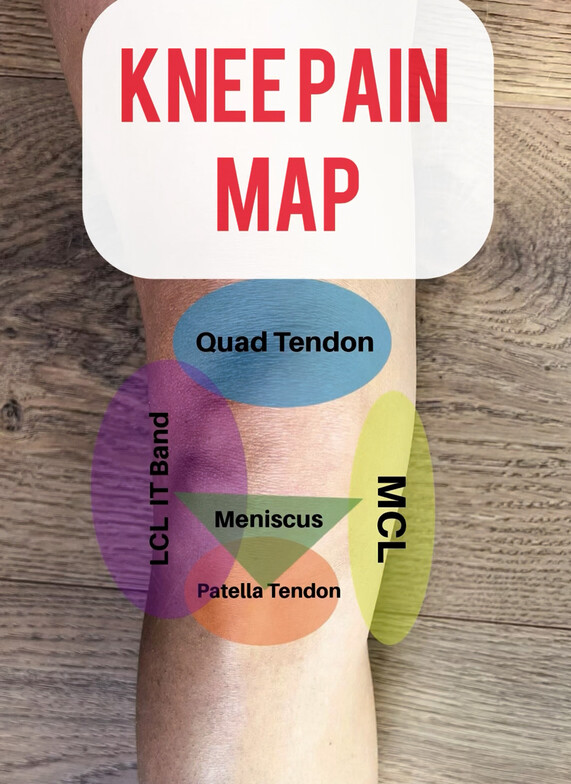
Knee pain isn’t random—and where it hurts often gives us important clues about what’s going on. Understanding the patterns of knee pain can help guide treatment and improve recovery.
Here’s a quick knee pain map to help you understand common pain locations and what they may be associated with:
Below the Kneecap
Pain in this area is often linked to patellar tendon overload, commonly seen in activities that involve jumping, running, or repetitive strain.
Above the Kneecap
Pain above the kneecap may indicate quad tendon irritation or tight quadriceps pulling on the knee.
Around the Kneecap
Pain surrounding the kneecap is frequently associated with patellofemoral pain, which can be influenced by tracking issues, hip weakness, or poor movement mechanics.
Along the Joint Line
Pain along the joint line may suggest meniscus irritation or ACL involvement, especially during twisting, pivoting, or squatting movements.
Inner (Medial) Knee
Pain on the inner knee can be caused by MCL strain, medial meniscus issues, or pes anserine irritation just below the joint.
Outer (Lateral) Knee
Pain on the outside of the knee is often related to IT band irritation, LCL strain, or lateral meniscus involvement.
Remember: This map helps identify patterns—but it doesn’t replace a full evaluation. The knee works as part of a chain, and treatment should always address movement, strength, and mobility above and below the joint.
If knee pain is limiting your workouts, daily activities, or sleep, we’re here to help you get answers—and create a plan tailored to you.
Contact us today to book an appointment and have your knee assessed.
Stay moving,

Dr. Steve Muscari
Contact Me